Welcome!... Innerease

About Us
Innerease is a mindful emotional wellness hub that blends holistic healing, expressive therapies, and practical techniques.
Innerease is a mindful emotional wellness hub that blends holistic healing, expressive therapies, and practical techniques.
Welcome!... Innerease
22
Jun
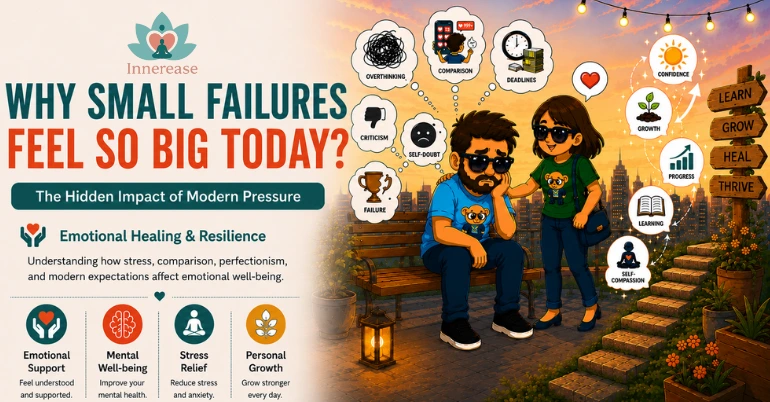
Have you ever spent hours worrying about a small mistake? Maybe you missed a deadline, received criticism, forgot an important task, or didn't perform as well as expected. While these situations are a normal part of life, they often feel much bigger than they should.
In today's world, even minor setbacks can trigger intense emotions such as anxiety, embarrassment, and self-doubt. Many people seeking emotional healing in Punjab are beginning to recognize that the issue isn't always the failure itself—it is the pressure surrounding it.
The reality is that modern life has changed how we view success and failure. As expectations continue to rise, small disappointments often feel far more significant than they actually are.
We live in a society that celebrates success everywhere we look. Whether it's social media, workplace recognition, academic performance, or personal goals, there is a constant message that we should always be improving and achieving more.
While ambition can be positive, it can also create unrealistic expectations. People begin to believe they must always succeed, make perfect decisions, and avoid mistakes at all costs.
When something goes wrong, even in a small way, it can feel like a personal failure rather than a normal life experience.
One of the biggest reasons small failures feel huge today is the rise of social media.
Every day, we see people sharing promotions, business successes, travel experiences, fitness achievements, and happy moments. What we rarely see are the struggles, rejections, and mistakes that happen behind the scenes.
This creates an illusion that everyone else is succeeding while we are falling behind. A small setback suddenly feels larger because it is compared to the highlight reels of others.
Constant comparison can make ordinary challenges seem extraordinary and leave people questioning their own progress.
Many people unknowingly connect their self-worth to their achievements.
Instead of thinking, "I made a mistake," they think, "I am a failure."
This mindset turns temporary setbacks into personal attacks on identity and confidence. A missed opportunity, poor result, or negative comment becomes evidence that something is wrong with them.
The truth is that mistakes are part of growth. They do not define intelligence, talent, or value as a person. Learning to separate self-worth from performance is one of the most important steps toward emotional resilience.
Modern life often feels like a race.
People compare careers, relationships, finances, and personal achievements with friends, colleagues, and even strangers online. This creates an ongoing fear of not being successful enough or moving fast enough.
As a result, small failures can trigger bigger fears about the future. A minor setback may lead someone to wonder if they will ever achieve their goals or catch up with others.
This fear can make simple disappointments feel much more serious than they truly are.
Technology has made life faster than ever before. We can communicate instantly, find answers in seconds, and receive products within days or even hours.
While convenience is beneficial, it has also reduced our patience for gradual progress.
Many people expect success to happen quickly. When growth takes time, they may view temporary struggles as signs of failure rather than natural parts of the learning process.
The reality is that meaningful success often requires persistence, patience, and the willingness to face setbacks along the way.
Life today comes with numerous responsibilities. Work pressure, family obligations, financial concerns, and constant digital engagement can leave people mentally exhausted.
When stress levels are already high, even a minor issue can feel overwhelming.
Think of emotional energy like a battery. If the battery is already running low, a small challenge can seem much larger than it actually is. This is why stress management plays such a vital role in emotional well-being.
Many individuals pursuing emotional healing in Punjab discover that reducing stress can significantly improve how they respond to everyday setbacks.
A common reason failures feel so painful is overthinking.
Instead of accepting a setback and moving forward, people replay the event repeatedly in their minds. They analyze every detail, imagine negative outcomes, and criticize themselves harshly.
This mental habit often creates more suffering than the original problem.
Overthinking can convince people that one mistake will ruin future opportunities, damage relationships, or define their entire journey. In reality, most setbacks are temporary and manageable.
Learning to challenge negative thought patterns can reduce the emotional impact of failure.
Despite how uncomfortable it feels, failure serves an important purpose.
Every successful individual has faced setbacks. Entrepreneurs experience business losses, athletes lose competitions, and professionals make mistakes before mastering their skills.
Failure provides valuable lessons that success often cannot teach. It encourages growth, adaptability, and resilience.
Rather than asking, "Why did I fail?" a more helpful question is, "What can I learn from this experience?"
This shift in perspective transforms failure from an obstacle into an opportunity.
The good news is that how we respond to setbacks can be changed. Small mindset shifts can make a significant difference.
Accept Imperfection — Nobody gets everything right all the time. Mistakes are part of being human.
Focus on Progress — Measure growth by improvement rather than perfection.
Avoid Unhealthy Comparisons — Remember that social media rarely reflects the complete reality of someone's life.
Practice Self-Compassion — Treat yourself with the same kindness you would offer a friend facing a similar challenge.
Learn From Every Experience — Every setback contains a lesson that can help you move forward more effectively.
Prioritize Mental Wellness — Healthy habits such as mindfulness, reflection, and emotional support can strengthen resilience and confidence.
At Innerease, many individuals share a common concern: they feel overwhelmed by setbacks that seem small on the surface. Often, the emotional reaction is not caused by the event itself but by the expectations and pressures attached to it.
Developing a healthier relationship with failure requires self-awareness, patience, and emotional balance. Through practices that support emotional healing in Punjab, people can learn to approach challenges with greater confidence and less fear.
As awareness about mental wellness grows, emotional healing in Punjab is helping individuals understand that setbacks are not signs of weakness. They are stepping stones toward personal growth and resilience.
Small failures feel huge today because modern life places enormous pressure on success, perfection, and constant achievement. Social comparison, overthinking, stress, and unrealistic expectations can magnify even the smallest setbacks.
However, failure is not something to fear. It is a natural and necessary part of growth. By changing the way we view mistakes, we can reduce their emotional impact and develop stronger resilience.
At Innerease, we believe that every setback carries an opportunity to learn, grow, and move forward with greater wisdom. The goal is not to avoid failure but to understand that it is simply one chapter in a much larger journey toward success.

Comments (0)
No comments yet. Be the first to comment!
Leave a Comment