Welcome!... Innerease

About Us
Innerease is a mindful emotional wellness hub that blends holistic healing, expressive therapies, and practical techniques.
Innerease is a mindful emotional wellness hub that blends holistic healing, expressive therapies, and practical techniques.
Welcome!... Innerease
08
Jun
"How are you?"
"I'm fine."
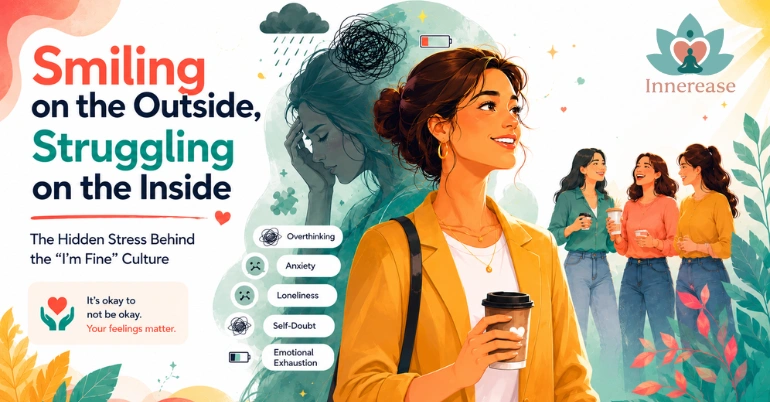
For many people, this response has become automatic. Even when they are stressed, anxious, exhausted, or emotionally overwhelmed, they continue to say they are fine. In today's busy world, hiding emotions has become so common that it is often seen as normal behavior.
The truth is that many people are carrying emotional burdens that nobody can see. Behind a smile may be anxiety. Behind productivity may be burnout. Behind "I'm fine" may be a person desperately needing support.
This growing trend, often called the "I'm fine" culture, is creating a silent mental and emotional health challenge that affects people of all ages.
Most people don't hide their feelings because they want to. They do it because they feel they have to.
Some fear being judged. Others don't want to appear weak. Many worry about becoming a burden to family, friends, or colleagues. Over time, people learn to suppress their emotions and present a version of themselves that seems strong and unaffected.
Social media has made this even more common. We constantly see images of success, happiness, and perfect lifestyles. This creates pressure to appear positive all the time, even when life feels difficult.
As a result, people become experts at hiding stress while silently struggling inside.
Stress doesn't disappear just because we ignore it. Instead, it accumulates beneath the surface and slowly affects our minds and bodies.
Hidden stress often shows up in unexpected ways:
Constant tiredness
Difficulty concentrating
Irritability and mood swings
Sleep problems
Frequent headaches
Low motivation
Feelings of loneliness
Emotional numbness
Many people don't connect these symptoms with emotional stress. They assume they're simply tired or having a bad week. However, when emotions remain unaddressed for long periods, they can significantly impact overall well-being.
This is one reason why many individuals are turning to emotional Wellness therapy in Ludhiana to better understand and manage their emotional health.
Society often praises people for being strong, independent, and resilient. While these qualities are valuable, constantly carrying emotional burdens without support can be exhausting.
When people feel they must always appear strong, they may:
Ignore Their Own Needs – They prioritize everyone else's well-being while neglecting their own emotional health.
Avoid Asking for Help – They believe they should handle everything alone, even when support is available.
Suppress Difficult Emotions – Sadness, frustration, disappointment, and fear get pushed aside instead of being processed.
Experience Emotional Burnout – Eventually, the emotional load becomes too heavy, leading to exhaustion and overwhelm.
True strength is not pretending everything is perfect. True strength is recognizing when support is needed.
1. You Feel Exhausted Even After Rest
If you're constantly tired despite getting enough sleep, emotional stress may be draining your energy.
2. You Say "I'm Fine" Automatically
If you rarely share how you're truly feeling, you may have developed a habit of suppressing emotions.
3. Small Problems Feel Overwhelming
Hidden stress reduces emotional capacity, making everyday challenges feel much bigger.
4. You Keep Yourself Constantly Busy
Many people stay busy to avoid facing uncomfortable emotions.
5. You Feel Alone Even Around Others
Emotional isolation can occur when people hide their struggles from those closest to them.
Recognizing these signs can be the first step toward better emotional health.
Being emotionally honest doesn't mean sharing every personal detail with everyone. It simply means acknowledging your feelings instead of denying them.
When people become more emotionally aware, they often experience:
Reduced stress levels
Better self-understanding
Improved relationships
Greater confidence
Healthier coping skills
Emotional honesty allows people to address challenges before they become overwhelming.
At Innerease, emotional wellness is viewed as an important part of overall personal growth and self-care.
Changing years of emotional suppression takes time, but small steps can make a big difference.
Check In With Yourself Daily – Take a few minutes each day to ask yourself how you are truly feeling.
Express Your Thoughts – Writing in a journal can help release emotions that have been building up.
Talk to Someone You Trust – A supportive conversation can provide comfort, clarity, and perspective.
Create Healthy Boundaries – Protecting your time and energy can prevent emotional exhaustion.
Seek Professional Guidance – Many individuals find that emotional Wellness therapy in Ludhiana provides a safe space to explore emotions, develop coping strategies, and improve emotional resilience.
Imagine a world where people didn't feel pressured to hide their struggles.
A world where asking for help was seen as courage instead of weakness.
A world where emotional well-being was treated with the same importance as physical health.
This change begins with simple actions:
Listening without judgment
Encouraging honest conversations
Supporting emotional expression
Showing empathy and compassion
When people feel safe enough to share their feelings, hidden stress loses its power.
Many people mistakenly believe that emotional wellness means never feeling sad, stressed, or anxious. In reality, emotional wellness is about understanding emotions and responding to them in healthy ways.
It means learning to cope, grow, and heal while accepting that difficult emotions are a normal part of life.
Organizations like Innerease encourage individuals to develop emotional awareness and healthier coping habits that support long-term well-being.
Many people are now exploring emotional Wellness therapy in Ludhiana as a proactive step toward improving their emotional health and overall quality of life.
The next time someone asks how you're doing, consider pausing before automatically saying, "I'm fine."
You don't have to share everything, but giving yourself permission to acknowledge your feelings can be incredibly powerful.
Hidden stress thrives in silence. Healing begins with honesty.
By moving beyond the "I'm fine" culture and embracing emotional awareness, we create healthier relationships, stronger communities, and happier lives. Sometimes the most courageous thing a person can say is not "I'm fine," but "I'm struggling, and that's okay."

Comments (0)
No comments yet. Be the first to comment!
Leave a Comment