Welcome!... Innerease

About Us
Innerease is a mindful emotional wellness hub that blends holistic healing, expressive therapies, and practical techniques.
Innerease is a mindful emotional wellness hub that blends holistic healing, expressive therapies, and practical techniques.
Welcome!... Innerease
16
Jul
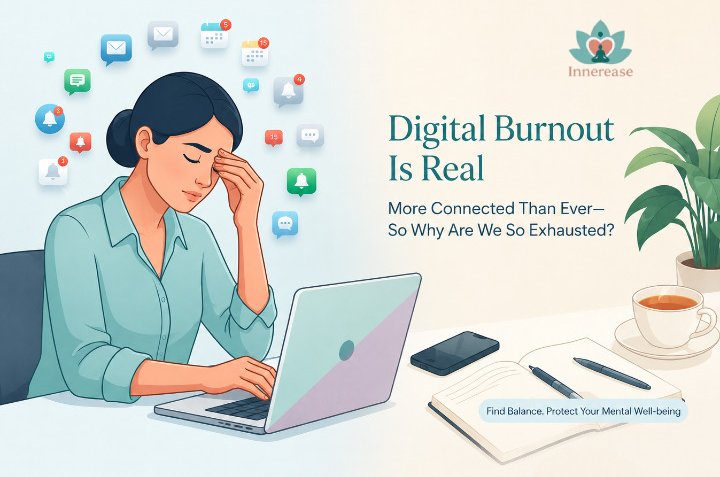
From checking emails first thing in the morning to scrolling social media before bed, our lives revolve around screens. Technology has made communication easier, work more flexible, and information more accessible. However, this constant connectivity has also created a growing problem: digital burnout.
Digital burnout is more than simply feeling tired after a long day of work. It's a state of emotional, mental, and physical exhaustion caused by excessive use of digital devices and the pressure to remain constantly connected. Experts increasingly recognize that prolonged digital engagement can affect concentration, sleep, stress levels, and overall well-being.
If you often feel overwhelmed by endless notifications, online meetings, emails, or social media, you're not alone. Many people are now seeking non-clinical counselling in Ludhiana to better manage digital stress and develop healthier technology habits.
Digital burnout occurs when prolonged exposure to screens and digital demands leaves you mentally exhausted. Unlike ordinary tiredness, this type of burnout affects your focus, motivation, emotional balance, and productivity.
Whether you're a student attending online classes, a professional working remotely, or someone who spends hours on social media, digital burnout can impact anyone.
Digital burnout develops gradually, making it easy to overlook.
Even after completing simple tasks, your brain feels exhausted. You may struggle to think clearly or make decisions.
Switching between emails, messages, meetings, and social media makes it harder to maintain focus on one task.
Small inconveniences suddenly feel overwhelming because your brain is overloaded.
Late-night scrolling or checking notifications before bed keeps your mind active, making quality sleep difficult.
Activities you once enjoyed begin to feel exhausting or uninteresting.
Many people experience anxiety, frustration, or emotional numbness without understanding the cause.
Modern technology keeps us connected every minute of the day. While this has many advantages, it also reduces opportunities for genuine mental rest.
Phones constantly demand attention through messages, emails, app alerts, and reminders. These interruptions make it difficult for the brain to fully relax.
Every day we consume:
Our brains process thousands of pieces of information daily, leading to cognitive overload.
Remote work has made it difficult for many people to disconnect after office hours. Work messages often continue into evenings and weekends.
Seeing carefully curated versions of other people's lives can create unrealistic expectations about success, relationships, appearance, and happiness.
Replying to messages while attending meetings or watching videos while working forces the brain to continuously switch attention, increasing mental fatigue.
Digital burnout doesn't only reduce productivity—it also impacts emotional well-being.
Some common effects include:
Research also suggests that continuous digital engagement, combined with poor sleep and heavy workloads, may contribute to burnout and reduced overall well-being.
Although anyone can experience digital burnout, certain groups are particularly vulnerable.
Online classes, assignments, educational apps, and social media often result in several hours of daily screen time.
Back-to-back virtual meetings and constant emails leave little time for mental recovery.
Managing clients, marketing, finances, and social media often means being online throughout the day.
The pressure to stay active, produce engaging content, and monitor audience engagement can quickly become overwhelming.
Growing up in a digital-first environment exposes teenagers to continuous online stimulation and social comparison.
Fortunately, digital burnout is manageable with intentional lifestyle changes.
Choose specific periods during the day without digital devices.
Examples include:
These simple habits allow your mind to recharge.
Not every app deserves immediate attention.
Reducing notifications improves concentration and lowers stress.
Every 20 minutes:
This reduces eye strain and provides brief mental breaks.
Walking outside without checking your phone helps your brain recover from constant stimulation.
Meditation, breathing exercises, or journaling can calm an overstimulated mind and improve emotional resilience.
Avoid screens at least 30–60 minutes before bedtime.
Instead, consider:
Quality sleep plays a vital role in reducing burnout.
Sometimes digital burnout becomes difficult to manage alone. If exhaustion, anxiety, or emotional stress continues to affect your daily life, speaking with a professional can make a significant difference.
Many individuals choose Non-clinical counselling in Ludhiana to learn healthy coping strategies, improve emotional resilience, and establish better digital boundaries. Professional guidance can help you recognize unhealthy patterns before they become more serious.
At Innerease, individuals receive compassionate support focused on emotional well-being, stress management, and practical strategies for maintaining a healthier balance between technology and everyday life. Whether you're feeling overwhelmed by work, social media, or constant online demands, seeking help is a positive step toward long-term wellness.
Technology itself isn't the problem—how we use it matters.
Try asking yourself:
Setting boundaries doesn't mean abandoning technology. Instead, it means using digital tools in ways that support your well-being rather than drain it.
Simple habits like limiting unnecessary screen time, taking regular breaks, and prioritizing real-life connections can significantly improve your emotional health. If you find it difficult to make these changes on your own, Non-clinical counselling in Ludhiana can provide personalized strategies to help you regain balance.
Digital burnout is a real and growing challenge in today's always-connected world. While technology offers incredible convenience, excessive screen time and constant digital demands can leave us feeling mentally exhausted, emotionally overwhelmed, and disconnected from ourselves.
Recognizing the early warning signs is the first step toward recovery. By creating healthier digital habits, taking intentional breaks, improving sleep, and seeking support when needed, you can protect your mental well-being without giving up the benefits of technology.
Remember, your mind deserves regular rest just as much as your body does. At Innerease, the focus is on helping individuals build healthier emotional habits and regain balance in an increasingly digital world. Small, consistent changes today can lead to a calmer, healthier, and more fulfilling tomorrow.

Comments (0)
No comments yet. Be the first to comment!
Leave a Comment