Welcome!... Innerease

About Us
Innerease is a mindful emotional wellness hub that blends holistic healing, expressive therapies, and practical techniques.
Innerease is a mindful emotional wellness hub that blends holistic healing, expressive therapies, and practical techniques.
Welcome!... Innerease
16
Jun
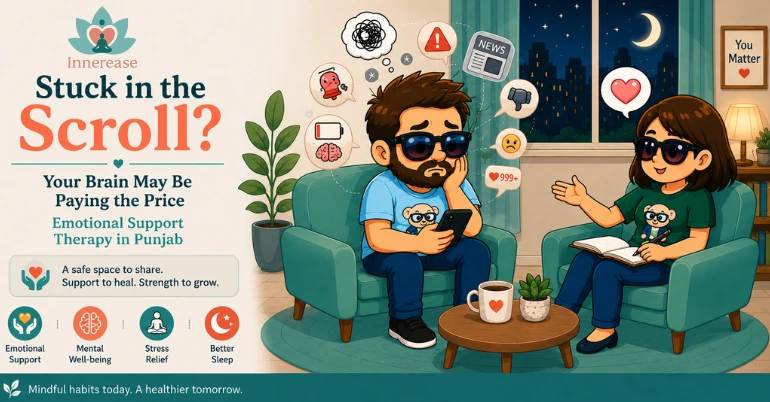
Have you ever opened your phone to check one notification and found yourself scrolling for an hour without realizing it? You're not alone. In today's digital age, many people spend a significant part of their day consuming news, social media updates, and online content. While staying informed has its benefits, excessive scrolling; especially through negative content; can leave you feeling mentally exhausted.
This habit, known as doomscrolling, has become increasingly common and is quietly affecting emotional well-being. Many people seeking mental wellness services in Ludhiana report feeling overwhelmed, anxious, and mentally drained after spending long periods online. At Innerease, we frequently see how excessive exposure to digital content can contribute to emotional stress and reduced mental clarity.
Understanding doomscrolling and its effects can help you create healthier digital habits and protect your mental well-being.
Doomscrolling refers to the habit of continuously scrolling through negative news, social media posts, or distressing online content for extended periods. Instead of stopping after reading a few updates, people often feel compelled to keep searching for more information.
The behavior became especially noticeable during global crises, but it continues to affect millions of people every day. Whether it's alarming headlines, social media debates, or endless videos, doomscrolling can quickly turn a few minutes online into hours of mental overload.
Although many people believe they are staying informed, the reality is that excessive information consumption often leaves them feeling more stressed than informed.
Our brains are naturally wired to pay attention to threats and negative information. Thousands of years ago, this helped humans survive. Today, however, the same instinct keeps us glued to our screens.
Several factors make doomscrolling difficult to stop:
Fear of Missing Out (FOMO) — People worry they might miss important updates if they stop checking their phones.
Constant Availability of Content — Social media platforms and news websites never run out of information. There is always another post, article, or video waiting.
Search for Control — When people feel uncertain or stressed, they often seek information to feel more in control of situations.
Instant Rewards — Every notification, update, or new piece of content provides a small sense of satisfaction that encourages continued scrolling.
These factors create a cycle that is difficult to break and can significantly impact mental well-being.
Mental fatigue occurs when your brain becomes overwhelmed from processing too much information over an extended period.
Unlike physical tiredness, mental fatigue affects concentration, emotional regulation, and decision-making. Every headline, video, or post requires your brain to process and respond to information. When this happens continuously, your mind struggles to rest.
People who regularly engage in doomscrolling may experience:
Difficulty focusing
Reduced productivity
Mental exhaustion
Increased anxiety
Emotional overwhelm
Lack of motivation
Mental health professionals and providers of mental wellness services in Ludhiana have observed that constant exposure to distressing content can significantly impact emotional balance. At Innerease, many individuals share concerns about feeling mentally drained despite getting enough sleep and physical rest.
Many people do not realize their scrolling habits are contributing to their stress levels. Here are some warning signs to watch for:
You Feel Exhausted Even After Sleeping — If you wake up feeling mentally tired despite adequate sleep, information overload may be part of the problem.
You Struggle to Concentrate — Constant exposure to fast-moving content can reduce attention span and make it difficult to focus on work or daily tasks.
Your Mood Frequently Changes — Repeated exposure to negative content can increase feelings of worry, frustration, sadness, and irritability.
You Automatically Reach for Your Phone — Checking your phone without a specific reason can be a sign that scrolling has become a habit rather than a choice.
You Feel Overwhelmed by Current Events — If every news update feels emotionally draining, your mind may need a break from constant information consumption.
The effects of doomscrolling often extend beyond screen time. Over time, the habit can influence multiple aspects of daily life.
Reduced Productivity — Frequent interruptions from social media and news updates make it harder to stay focused and complete important tasks.
Sleep Disturbances — Many people scroll before bedtime, exposing themselves to stimulating content and blue light that can interfere with quality sleep.
Increased Stress Levels — Consuming large amounts of negative information can create a constant sense of alertness and worry.
Strained Relationships — Excessive screen time may reduce meaningful interactions with family and friends, leading to feelings of disconnection.
Emotional Burnout — When your brain is constantly processing stressful information, emotional resilience gradually decreases.
The good news is that doomscrolling is a habit that can be changed. Small adjustments can make a significant difference.
Set Daily Screen Time Limits — Use app timers or phone settings to limit the amount of time spent on social media and news platforms.
Avoid News Immediately After Waking Up — Starting your day with negative information can affect your mood and energy levels.
Create Phone-Free Periods — Set specific times during the day when you intentionally stay away from your phone.
Follow Positive Content — Balance your feed by following educational, inspiring, or uplifting accounts.
Practice Mindful Technology Use — Before opening an app, ask yourself why you are using it and whether it aligns with your goals.
Schedule Digital Detox Breaks — Even short breaks from screens can help your mind recover and improve focus.
Your attention is a valuable resource. Every hour spent endlessly scrolling is time and energy that could be invested in personal growth, relationships, hobbies, or self-care.
Technology itself is not the problem. The challenge lies in how we use it. Becoming more intentional about your online habits can help reduce stress and improve emotional well-being.
By setting boundaries around digital consumption, you can create more space for meaningful experiences and mental clarity.
Doomscrolling may seem harmless, but its long-term impact on mental health can be significant. Constant exposure to endless streams of information can leave your mind feeling overwhelmed, exhausted, and emotionally drained.
If you frequently feel mentally tired despite getting enough rest, it may be time to examine your digital habits. By creating healthier relationships with technology and becoming more mindful of your screen time, you can reduce mental fatigue and regain balance in your life.
For individuals seeking additional support, mental wellness services in Ludhiana can provide effective strategies for managing stress, improving emotional resilience, and building healthier habits in an increasingly digital world.

Comments (0)
No comments yet. Be the first to comment!
Leave a Comment