Welcome!... Innerease

About Us
Innerease is a mindful emotional wellness hub that blends holistic healing, expressive therapies, and practical techniques.
Innerease is a mindful emotional wellness hub that blends holistic healing, expressive therapies, and practical techniques.
Welcome!... Innerease
16
Mar
Overthinking is something most of us struggle with at some point in our lives. It can take a simple problem and turn it into a mental maze, leaving you feeling exhausted, anxious, and stuck. If you constantly find yourself replaying conversations, imagining worst-case scenarios, or doubting your decisions, it may be time to take control of your thought patterns. At InnerEase, we believe that understanding overthinking and learning practical techniques to manage it can significantly improve mental clarity and emotional well-being.
Overthinking is more than just thinking deeply. It’s when your thoughts become repetitive, unproductive, and stressful. Instead of finding solutions, your mind keeps circling around “what if” scenarios. This can lead to anxiety, stress, decision paralysis, and even affect your relationships and work performance. Over time, chronic overthinking can impact your overall mental and physical health.
Understanding why you overthink is the first step toward change. Common causes include fear of failure, perfectionism, unresolved past experiences, or simply feeling overwhelmed by life’s responsibilities. Once you recognize these triggers, you can start applying techniques to regain control.
The first step is awareness. Keep a small journal or note on your phone to track situations that make you overthink. Is it work-related stress, personal relationships, or decision-making moments? Once you identify the triggers, it becomes easier to address them rather than letting your mind wander uncontrollably.
A common habit of overthinkers is endless analysis before making a decision. To counter this, give yourself a fixed amount of time to think about a problem. For instance, spend 10 minutes weighing pros and cons and then make a choice. Setting a limit reduces mental fatigue and prevents unnecessary stress.
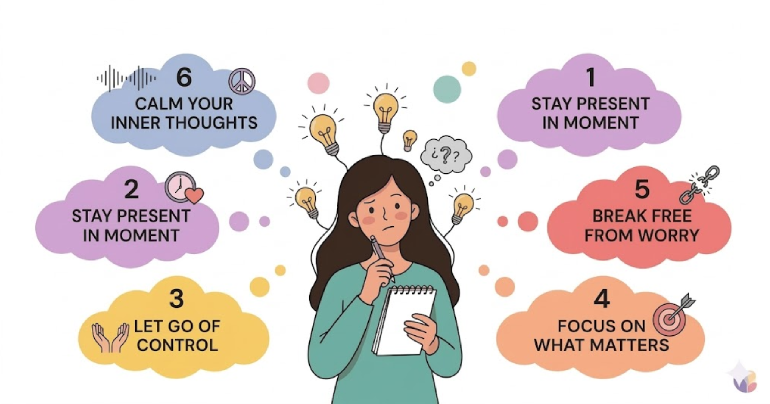
Mindfulness is the art of staying present. Overthinking often stems from dwelling on the past or worrying about the future. Techniques such as deep breathing, meditation, or simply observing your thoughts without judgment can help anchor your mind in the present moment. Even 5–10 minutes a day can create noticeable changes.
Overthinking is often fueled by negative self-talk. Whenever a thought spirals into fear or doubt, question its validity. Ask yourself: “Is this thought based on facts or assumptions?” or “What evidence supports this worry?” By challenging these thoughts, you can break the cycle of rumination.
Instead of dwelling on problems, shift your focus to solutions. Ask yourself, “What can I do right now to improve this situation?” By concentrating on practical steps, you move from endless thinking to purposeful action, which provides a sense of control and relief.
Constantly searching for answers online or seeking others’ opinions can feed overthinking. Set boundaries on the amount of information you consume. Rely on trusted sources, make a decision, and move forward.
Exercise isn’t just good for your body; it also clears your mind. Activities like walking, yoga, or cycling reduce stress hormones and help your brain focus on the present. Physical activity also releases endorphins, improving mood and reducing anxiety linked to overthinking.
Sometimes, overthinking can become overwhelming and affect your daily life. If anxiety, stress, or negative thought patterns persist, consider professional support. At InnerEase, trained therapists and counselors provide guidance to help you understand your thoughts, manage stress, and develop healthier thinking habits.
Overthinking may feel like a permanent mental habit, but it is something you can control with the right techniques. By identifying triggers, practicing mindfulness, challenging negative thoughts, and taking actionable steps, you can free your mind from endless rumination. Remember, mental clarity and emotional well-being are achievable when you commit to consistent practice and self-awareness.
Breaking the cycle of overthinking not only reduces stress but also improves decision-making, productivity, and your overall quality of life. Start implementing these practical techniques today, and take the first step toward a calmer, more focused mind with the support of InnerEase.

Comments (0)
No comments yet. Be the first to comment!
Leave a Comment