Welcome!... Innerease

About Us
Innerease is a mindful emotional wellness hub that blends holistic healing, expressive therapies, and practical techniques.
Innerease is a mindful emotional wellness hub that blends holistic healing, expressive therapies, and practical techniques.
Welcome!... Innerease
19
Sep
It's 11 pm. You're at your desk, phone screen the only light in the room, scrolling through nothing in particular. You can't quite name what you're feeling. Not sad, not really anxious either. Just stuck.
A lot of people land here before they ever think seriously about their mental health. The tiredness is real. So I do not know what to do next. At Innerease, this is one of the first things clients describe when they start reaching out for support.
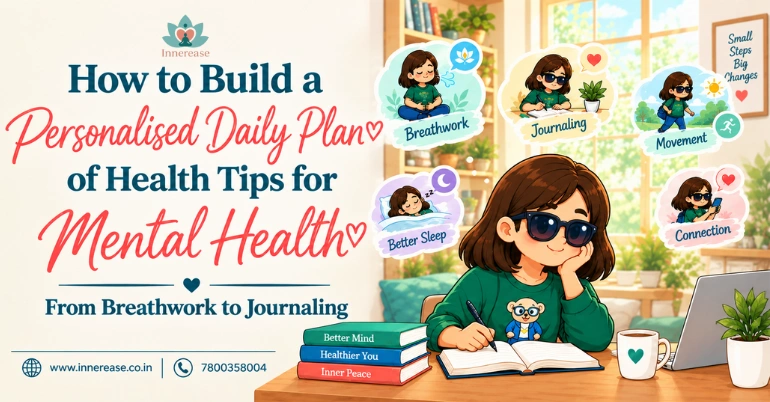
What follows isn't a dramatic overhaul or a one size fits all checklist. It's a set of small, well tested habits you can pull from and build into your own day, whether that's a three minute breathing exercise in the morning or ten minutes of journaling before bed.
Most of us only reach for self care once we're already running on empty. It's an understandable instinct, but it works backwards. Mental fitness behaves a lot like physical fitness. You build the strength before the moment you actually need it, not during.
There's decent science behind this. The brain keeps forming new connections through repetition (this is neuroplasticity, in case the word rings a bell from somewhere), and consistent practice genuinely seems to change how we respond to stress over time. One often cited figure: about 150 minutes of moderate activity a week is tied to a 25 percent lower risk of depression. Even half of that still helps. The amount matters less than showing up for it regularly.
Someone I'd describe as a fairly typical case put it well: his approach to mental health used to be "nothing, until everything falls apart." He added two small morning habits and stuck with them for three weeks. His mood noticeably shifted. Nothing heroic happened. He just did something small, every single day.
The first half hour of your day carries more weight than people give it credit for. You don't need a ten step routine, just a few things done consistently.
Breathe first. Three to five minutes of slow breathing is enough to start. Box breathing is an easy entry point: inhale for four counts, hold for four, exhale for four, hold again for four. It sounds almost too simple to matter, but slow breathing switches on your parasympathetic nervous system, lowers cortisol, and settles your heart rate. Give it a week or two and the effect becomes hard to miss.
Move, in whatever form works. A walk, a short yoga flow, a bike ride to work. It genuinely doesn't need to look impressive. Around 150 minutes a week of moderate movement is linked to real drops in both depression and anxiety symptoms. Thirty minutes on most days does more for your mental health than almost anything else on this list, and it's free.
Write down one thought. Five minutes, one worry that's already looping before 9 am. Name what's distorting it, maybe it's catastrophising, maybe all or nothing thinking, and write one more balanced version underneath. This isn't about forcing yourself to think positive. It's about checking your thoughts against reality instead of assuming they already are reality.
By mid afternoon your nervous system has absorbed a lot without you noticing, emails, small conflicts, a dozen minor decisions. It builds quietly, and then suddenly it doesn't feel quiet at all.
A five minute pause between tasks helps more than people expect. Even beginners who try a few minutes of mindfulness a day report feeling less stressed within a week or two. If sitting still isn't your thing, try the five senses trick instead: notice five things you can see, four you can touch, three you can hear, two you can smell, one you can taste. Simple, almost silly sounding, but it pulls your attention out of your head and back into the room.
Don't let connection become an afterthought either. Scrolling someone's feed and actually calling them are not the same thing, even though they can feel similar in the moment. Harvard's long running Study of Adult Development, among others, has tied regular, real connection to lower depression risk and higher life satisfaction over decades. A short call, lunch with someone instead of alone, these count as self care too, not just as social obligations.
Journaling, in whichever form fits you. Gratitude journaling means three specific moments from the day, not vague thankfulness but actual detail. Free writing means ten minutes on a timer, no editing yourself. Worry journaling means getting the midnight loop down on paper before it can loop all night. The evidence on expressive writing shows modest but real reductions in anxiety and rumination; gratitude writing tends to move the needle more on mood specifically. Pick whichever matches what you actually need that night.
Try something creative if words don't cut it. Drawing, collage, even just colouring in. This has nothing to do with talent. Some feelings don't translate well into sentences, and a different kind of expression can get them out anyway.
Wind down deliberately. Screens off for the last hour before bed if you can manage it, same bedtime most nights. A bit of stretching, a device free hour, these are small signals to your body that the day is actually over.
Sleep and mood pull on each other in both directions. Bad sleep makes it harder to regulate emotion and raises your vulnerability to anxiety and depression. Poor mental health then disrupts sleep right back. It's a loop that tightens on itself if left alone, but the research on fixing it is fairly clear: improving sleep consistently produces meaningful drops in both depression and anxiety symptoms.
None of the fixes are glamorous. Keep the same sleep and wake time, weekends included. Cut caffeine off in the early afternoon. No screens in that last hour. Keep the room cool, dark, and quiet. If you're lying awake, get up for a bit and come back only once you're actually drowsy.
Self help genuinely works, but it isn't built for every situation. Some signs are worth taking seriously: low mood or anxiety that's stuck around for more than two weeks, pulling away from things you used to enjoy, real trouble functioning at work or at home, physical symptoms with no clear cause, or any thoughts of hopelessness or self harm. None of that means you've failed at self care. It means your system is asking for more than a journal can give it.
Pick two habits from everything above. Not five, not all of them. Give them two weeks before adding anything else. Even a few minutes of breathing, a short walk, or ten minutes of writing carries a measurable benefit on its own. Small and consistent beats ambitious and short lived, basically every time.
Your mental health deserves the kind of ongoing attention you'd give your physical health, not just a scramble when something breaks. These habits are a starting point, not a replacement for professional support when you actually need it. And they don't need to be done perfectly to still be worth doing. If you'd like help building a plan around your specific situation, Innerease offers Mental Wellness Services in Ludhiana designed to help you start that conversation.

Comments (0)
No comments yet. Be the first to comment!
Leave a Comment