Welcome!... Innerease

About Us
Innerease is a mindful emotional wellness hub that blends holistic healing, expressive therapies, and practical techniques.
Innerease is a mindful emotional wellness hub that blends holistic healing, expressive therapies, and practical techniques.
Welcome!... Innerease
20
Jan
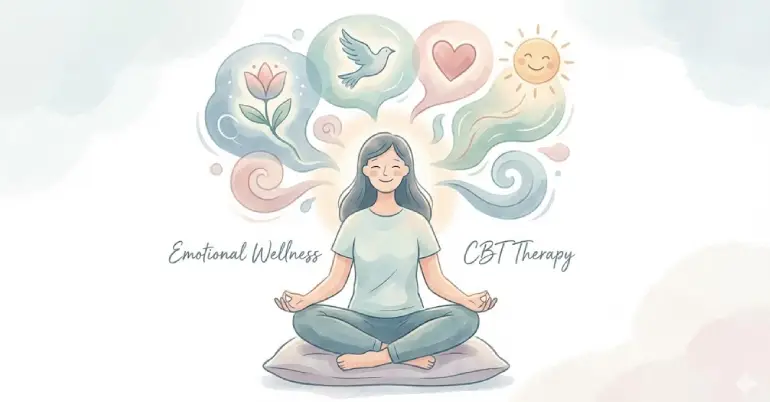
Our thoughts shape how we feel, and how we feel influences how we act. Many people experience emotional distress not only because of external situations, but because of the way they interpret those situations. Cognitive Behavioral Therapy (CBT) is a structured, evidence-based approach that helps individuals recognize unhelpful thought patterns and replace them with healthier, more balanced ways of thinking. Over time, this shift can lead to lasting emotional and behavioral change.
CBT is based on a simple but powerful idea: thoughts, emotions, and behaviors are deeply interconnected. When a negative event occurs, our immediate interpretation of that event often determines our emotional response. For example, failing an interview might lead one person to think, “I’m not good enough,” resulting in sadness or hopelessness. Another person might think, “I need more preparation,” which may lead to motivation instead of despair.
Our thoughts shape how we feel, and how we feel influences how we act. Many people experience emotional distress not only because of external situations, but because of the way they interpret those situations. Cognitive Behavioral Therapy (CBT) is a structured, evidence-based approach that helps individuals recognize unhelpful thought patterns and replace them with healthier, more balanced ways of thinking. Over time, this shift can lead to lasting emotional and behavioral change.
Many unhelpful thought patterns fall into predictable categories known as cognitive distortions. These include:
Emotional Release: Reduce stress
Self-Awareness: Gain clarity
Validation & Acceptance: Feel supported
Reduced Guilt & Shame: Let go
After identifying unhelpful thoughts, CBT encourages gentle but structured questioning. Is this thought based on facts or assumptions? What evidence supports it? What evidence contradicts it? What would you say to a friend who had this thought?
Through this process, distorted thoughts are gradually replaced with more realistic and compassionate ones. The goal is not forced positivity, but balanced thinking. For instance, replacing “I always fail” with “I didn’t succeed this time, but I’ve handled challenges before.”
CBT principles can be applied beyond formal therapy sessions. Journaling thoughts, practicing mindfulness, setting realistic goals, and reflecting on emotional triggers are all ways to integrate CBT into daily life. With consistent practice, even small changes in thinking can create meaningful shifts in emotional well-being.
Wellness-focused platforms like innerease emphasize the importance of self-awareness and skill-building in emotional growth, aligning naturally with CBT’s practical and empowering approach. By learning to understand your inner dialogue, you begin to transform your relationship with yourself.
Changing thought patterns is not about eliminating negative thoughts altogether—it’s about learning to respond to them with awareness, curiosity, and balance. CBT offers a clear, structured path to understanding how the mind works and how small cognitive shifts can lead to significant emotional change.
By practicing CBT techniques regularly, individuals can develop resilience, emotional clarity, and healthier coping mechanisms. Whether guided by a professional or supported through self-development platforms like innerease, CBT remains a powerful tool for creating lasting inner change.

Comments (0)
No comments yet. Be the first to comment!
Leave a Comment