Welcome!... Innerease

About Us
Innerease is a mindful emotional wellness hub that blends holistic healing, expressive therapies, and practical techniques.
Innerease is a mindful emotional wellness hub that blends holistic healing, expressive therapies, and practical techniques.
Welcome!... Innerease
29
Jun
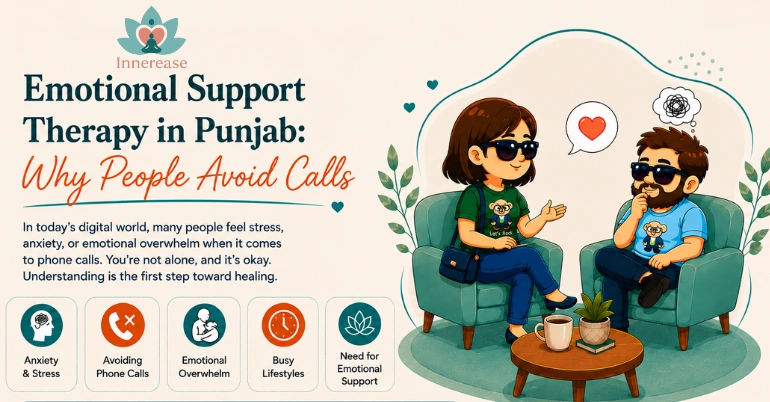
Have you ever noticed yourself staring at your phone while it rings, hoping it stops before you have to answer? You're not alone. In today's digital world, many people prefer sending a text message over making or answering a phone call. What once felt like the quickest way to communicate now often feels stressful, inconvenient, or emotionally draining.
This growing shift isn't simply about changing technology. It also reflects changes in lifestyle, mental health, and communication habits. Understanding why people avoid phone calls can help us become more aware of our emotional well-being and improve the way we connect with others.
Messaging apps have completely changed how we communicate. Whether it's WhatsApp, Instagram, or other platforms, texting allows people to reply whenever they're comfortable.
Unlike phone calls, messages offer:
For many, this flexibility feels much more comfortable than speaking on the phone unexpectedly.
A ringing phone demands immediate attention. You don't know what the other person wants, how long the conversation will last, or whether it will bring good or bad news.
This uncertainty can create anxiety, especially for people who already experience stress or emotional exhaustion.
Some common thoughts include:
"What if I say the wrong thing?"
"I'm not mentally prepared to talk."
"I don't have the energy right now."
"Can this conversation wait?"
These feelings are becoming increasingly common across all age groups.
Many people avoid phone calls because they feel nervous speaking without seeing the other person's facial expressions or body language. Without visual cues, conversations may feel awkward or difficult to manage. Some worry about awkward silences, saying something inappropriate, or misunderstanding the other person's tone.
For individuals experiencing anxiety, even a simple phone call can become emotionally exhausting.
Seeking emotional support therapy in Punjab can help individuals better understand these fears and develop healthier communication habits.
Modern lifestyles are incredibly fast-paced. Between work, family responsibilities, studies, and personal commitments, many people simply don't have the time or mental energy for lengthy phone calls.
A quick message often communicates the same information in less time.
This doesn't necessarily mean people care less—it simply reflects how communication has evolved to match today's busy schedules.
Years ago, phone calls were expected. Today, many people consider an unexpected call disruptive.
Imagine being focused on work, relaxing after a long day, or spending time with family when your phone suddenly rings.Instead of answering immediately, many prefer receiving a text first so they can decide the best time to respond. Respecting personal boundaries has become an important part of modern communication.
After spending hours attending online meetings, working with customers, or interacting socially throughout the day, many people experience mental fatigue.
Talking requires emotional energy.When someone feels emotionally drained, even casual conversations can seem overwhelming. This is one reason why people often ignore calls but happily reply later through text.
If this feeling becomes frequent, it may indicate emotional burnout rather than simple tiredness.
Professional guidance through emotional support therapy in Punjab can help individuals recognize emotional fatigue early and learn healthy coping strategies.
Phone calls are often associated with serious discussions:
Family issues
Workplace concerns
Financial problems
Relationship conflicts
Unexpected responsibilities
Because of these associations, some people feel anxious whenever their phone rings.
Avoiding calls becomes a temporary coping mechanism to postpone uncomfortable emotions.
However, repeatedly avoiding communication may increase stress over time rather than reduce it.
Generation Z and younger Millennials have grown up with smartphones and instant messaging.
For them:
Voice notes feel easier than phone calls.
Texting feels more natural than speaking.
Video calls are preferred only when necessary.
Their communication style isn't necessarily worse—it's simply different from previous generations.
Understanding these preferences helps reduce misunderstandings between family members, employers, and friends.
Today's communication tools allow us to:
Send voice messages
Share photos instantly
React with emojis
Schedule replies
Communicate without interrupting others
Because these options exist, traditional phone calls are no longer the default method of communication.
People often reserve calls for emergencies or conversations that truly require immediate attention.
Occasionally ignoring phone calls is perfectly normal.
However, if someone consistently avoids:
Family members
Close friends
Workplace communication
Important responsibilities
It may signal deeper emotional challenges.Persistent avoidance can sometimes be linked to anxiety, stress, depression, or emotional burnout. Recognizing these patterns early can prevent communication difficulties from affecting relationships and daily life.
If phone conversations make you uncomfortable, small steps can make a big difference.
Try these simple techniques:
Schedule calls instead of making unexpected ones.
Start with short conversations.
Take a few deep breaths before answering.
Write down important points beforehand.
Use headphones to feel more relaxed.
Practice speaking with trusted friends or family.
Building confidence gradually often feels much easier than forcing yourself into long conversations.
Communication should never feel like a constant source of stress.
If anxiety, emotional exhaustion, or fear of conversations begins affecting your daily life, seeking support can be an important step toward feeling better.
At Innerease, people receive compassionate guidance to better understand their emotions, strengthen communication skills, and build healthier coping strategies.
Whether someone struggles with anxiety, emotional fatigue, or overwhelming stress, emotional support therapy in Punjab offers practical tools to improve emotional wellness and everyday relationships.
Avoiding phone calls isn't always about being rude or antisocial. For many people, it's a response to stress, anxiety, emotional exhaustion, or simply changing communication preferences.
Understanding these reasons helps us become more patient—with ourselves and with others.
Healthy communication isn't about answering every call immediately. It's about finding ways to connect that support both emotional well-being and meaningful relationships.
If avoiding conversations has started affecting your personal or professional life, remember that support is available. Innerease believes that small emotional changes can lead to stronger confidence, healthier relationships, and a more balanced life.

Comments (0)
No comments yet. Be the first to comment!
Leave a Comment