Welcome!... Innerease

About Us
Innerease is a mindful emotional wellness hub that blends holistic healing, expressive therapies, and practical techniques.
Innerease is a mindful emotional wellness hub that blends holistic healing, expressive therapies, and practical techniques.
Welcome!... Innerease
12
Jun
We all feel tired from time to time. Sometimes it comes after a long day of work, while other times it feels like no amount of sleep can make us feel refreshed. Many people confuse emotional exhaustion with physical tiredness because both can leave you feeling drained. However, understanding the difference is important for maintaining overall well-being.
At Innerease, we often meet individuals who believe they are simply tired, when in reality they are emotionally overwhelmed. Seeking emotional counselling in Ludhiana can help people recognize the signs of emotional exhaustion and find healthy ways to regain balance in their lives.
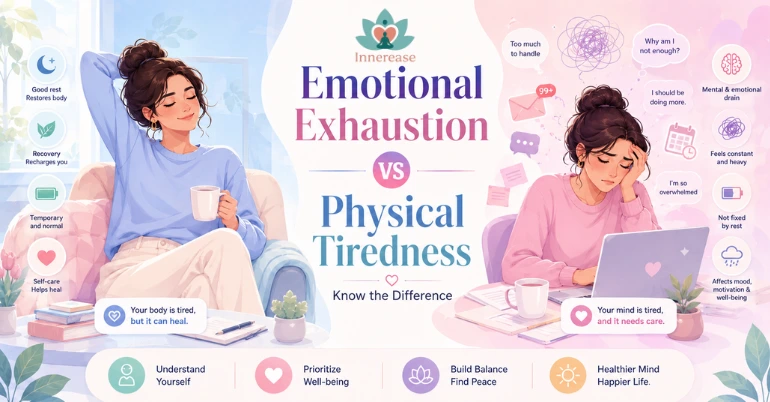
Physical tiredness is the body’s natural response to physical activity, lack of sleep, illness, or overexertion. It usually occurs when your muscles and body need rest and recovery.
Common signs of physical tiredness include:
Heavy or sore muscles
Sleepiness throughout the day
Reduced physical energy
Difficulty performing physical tasks
Improved energy after proper rest
The good news is that physical tiredness often goes away after getting enough sleep, eating nutritious food, staying hydrated, and allowing the body to recover.
Emotional exhaustion is a state of mental and emotional depletion caused by prolonged stress, anxiety, emotional pressure, or overwhelming life situations. It can develop slowly and often remains unnoticed until it starts affecting daily life.
People experiencing emotional exhaustion may feel:
Constantly overwhelmed
Mentally drained
Irritable or frustrated
Unmotivated
Emotionally numb
Unable to concentrate
Unlike physical tiredness, emotional exhaustion cannot always be fixed by simply sleeping more or taking a day off.
1. The Cause
Physical tiredness is usually caused by physical exertion, poor sleep, illness, or a demanding routine. Emotional exhaustion is often triggered by:
Work stress
Relationship problems
Financial worries
Caregiving responsibilities
Long-term anxiety
Emotional trauma
Understanding the root cause can help determine the best solution.
2. Recovery Time
Physical fatigue often improves after a good night’s sleep or a period of rest. Emotional exhaustion tends to stay even after sleeping. You may wake up feeling just as drained as you felt before going to bed.
3. Impact on Mood
When physically tired, you may feel sleepy or low on energy, but your emotional state often remains stable. Emotional exhaustion can affect your mood significantly. It may cause:
Frequent frustration
Mood swings
Sadness
Hopelessness
Increased sensitivity
4. Effect on Productivity
Physical tiredness mainly affects physical performance. Emotional exhaustion impacts mental performance. You may find it difficult to focus, make decisions, stay motivated, or complete simple tasks.
Many people ignore emotional exhaustion because the symptoms can be subtle at first.
Watch out for these warning signs:
Constant Mental Fatigue — Even after resting, your mind feels busy and exhausted.
Lack of Motivation — Activities that once excited you no longer feel enjoyable.
Feeling Detached — You may feel disconnected from family, friends, or even yourself.
Increased Irritability — Small problems start feeling overwhelming, and patience becomes difficult.
Difficulty Sleeping — Ironically, emotional exhaustion can make it harder to get quality sleep.
If these signs continue for weeks or months, it may be time to seek support through emotional counselling in Ludhiana to better understand and manage your emotional well-being.
Physical symptoms are easier to recognize. If you have a headache or muscle pain, the problem feels obvious. Emotional exhaustion is different. Many people tell themselves they just need to work harder, stay positive, or keep pushing forward. As a result, they continue carrying emotional burdens without addressing the real issue. Over time, this can affect:
Personal relationships
Work performance
Self-confidence
Mental health
Overall quality of life
Recognizing emotional exhaustion early can prevent these challenges from becoming more serious.
Prioritize Rest Beyond Sleep
Recovery isn’t only about sleeping. It also includes mental and emotional rest. Consider:
Taking breaks from stressful situations
Reducing unnecessary commitments
Spending time in nature
Practicing mindfulness
Set Healthy Boundaries
Learning to say “no” can protect your emotional energy. Boundaries help prevent burnout and reduce feelings of overwhelm.
Talk About Your Feelings
Many people carry emotional stress alone. Sharing your thoughts with a trusted friend, family member, or professional can provide relief and clarity.
Engage in Activities You Enjoy
Simple activities such as reading, music, painting, journaling, or walking can help restore emotional balance.
Seek Professional Support
Sometimes emotional exhaustion requires deeper understanding and guidance. Professional counselling can help identify stress triggers and develop healthier coping strategies.
At Innerease, individuals receive support in understanding emotional challenges and building practical tools for long-term emotional wellness.
Prevention is always better than recovery. Some helpful habits include:
Maintaining a healthy work-life balance
Taking regular breaks
Practicing self-care
Managing stress effectively
Staying connected with supportive people
Seeking help before stress becomes overwhelming
Small daily habits can make a significant difference in protecting emotional health.
Physical tiredness and emotional exhaustion may feel similar, but they are not the same. Physical fatigue usually improves with rest, while emotional exhaustion often requires deeper emotional care and stress management. Ignoring emotional exhaustion can affect your happiness, relationships, and overall well-being.
If you constantly feel drained despite getting enough rest, it may be a sign that your mind and emotions need attention. Professional guidance through emotional counselling in Ludhiana can help you identify the underlying causes and regain emotional balance. With the right support from Innerease, it is possible to move from exhaustion toward a healthier, more fulfilling life.

Comments (0)
No comments yet. Be the first to comment!
Leave a Comment